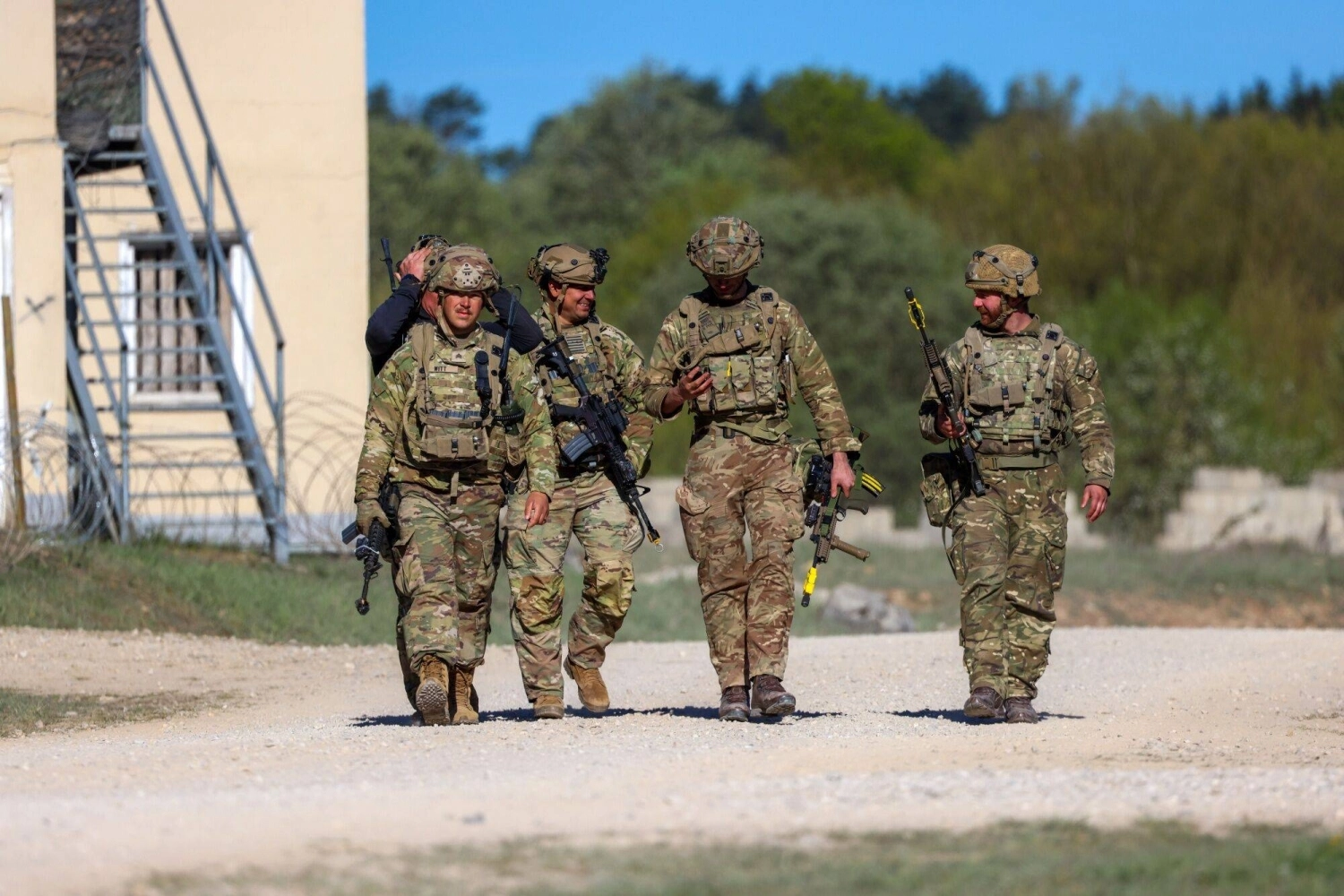
Senior Republican lawmakers and international allies have sharply criticized the Pentagon’s recent decision to withdraw 5,000 U.S. troops stationed in Germany, warning that the move risks undermining European deterrence and sends the “wrong signal” to Russian President Vladimir Putin.
The withdrawal announcement comes amid a growing public dispute between U.S. President Donald Trump and German Chancellor Friedrich Merz, raising concerns across the 32-member NATO alliance about the future of transatlantic security cooperation.
Senate Armed Services Committee Chairman Roger Wicker and House Armed Services Committee Chairman Mike Rogers issued a joint statement expressing deep concern over the withdrawal. They argued that rather than reducing the American footprint, the administration should reposition those troops further east to maintain a robust defense posture, particularly as European allies are actively moving to increase their own defense spending.
“Prematurely reducing America’s forward presence in Europe before those capabilities are fully realized risks undermining deterrence,” the joint statement read. “Rather than withdrawing forces from the continent altogether, it is in America’s interest to maintain a strong deterrent in Europe by moving these 5,000 U.S. forces to the east.”
The Trump-Merz Feud and Further Cuts
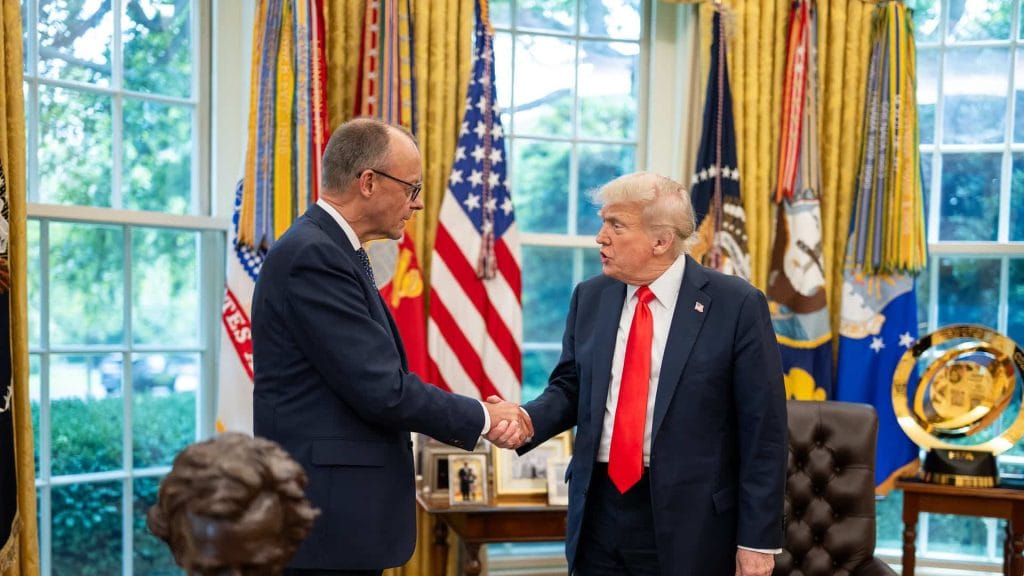
The underlying catalyst for the withdrawal appears closely tied to recent diplomatic friction. On Monday, Chancellor Merz remarked to students that the “Americans clearly have no strategy” and suggested the U.S. was being “humiliated” by Iranian negotiators.
President Trump swiftly responded on Truth Social, stating that Merz “doesn’t know what he’s talking about” and accused the Chancellor of thinking it was acceptable for Iran to possess nuclear weapons. Shortly after this exchange, the Pentagon, directed by Defense Secretary Pete Hegseth, confirmed the troop reduction.
While the U.S. currently maintains over 36,000 active-duty troops in Germany—its largest deployment in Europe—Trump indicated on Saturday that the reductions would not stop at 5,000. “We’re going to cut way down, and we’re cutting a lot further than 5,000,” Trump stated, also hinting at potential future withdrawals from Italy and Spain.
Pentagon spokesman Sean Parnell confirmed that the German withdrawal is expected to be completed over the next six to twelve months.
NATO’s Growing Alarm and European Defense Shifts
The unilateral decision has triggered alarm bells across Europe. Polish Prime Minister Donald Tusk issued a stark warning on Saturday: “The greatest threat to the transatlantic community is not its external enemies, but the ongoing disintegration of our alliance. We must all do what it takes to reverse this disastrous trend.”
In Berlin, German Defense Minister Boris Pistorius stressed that the continued presence of American soldiers remains in the mutual interest of both nations. Meanwhile, NATO spokesperson Allison Hart noted that the alliance is working with the U.S. to clarify the details of the withdrawal. Hart emphasized that the move “underscores the need for Europe to continue to invest more in defence and take on a greater share of the responsibility for our shared security.”
This push for European self-reliance is already showing tangible results. Following the NATO summit in The Hague last year, allies agreed to an ambitious target of investing 5% of their GDP in defense. Germany, previously criticized by Trump as “delinquent” for missing the old 2% target, has fundamentally shifted its policy under former Chancellor Olaf Scholz and current Chancellor Merz. Germany is now projected to spend €105.8 billion on defense in 2027, effectively reaching 3.1% of its GDP when factoring in aid to Ukraine.
Domestic Political Divide
Back in Washington, the withdrawal has exposed stark partisan divisions. Representative Adam Smith, the top Democrat on the House Armed Services Committee, condemned the move as devoid of coherent strategic analysis, attributing it instead to “the hurt feelings of a president who is seeking political vengeance.”
Conversely, Republican Representative Clay Higgins expressed unwavering support for the administration. Taking aim at European allies, Higgins mockingly suggested on X (formerly Twitter) that the U.S. should pull troops from the “arrogant Germans” and perhaps send them the U.S. Senate instead, adding that Western Europe would be well protected by the “League of the Royal Filibuster.”